The answer: 63
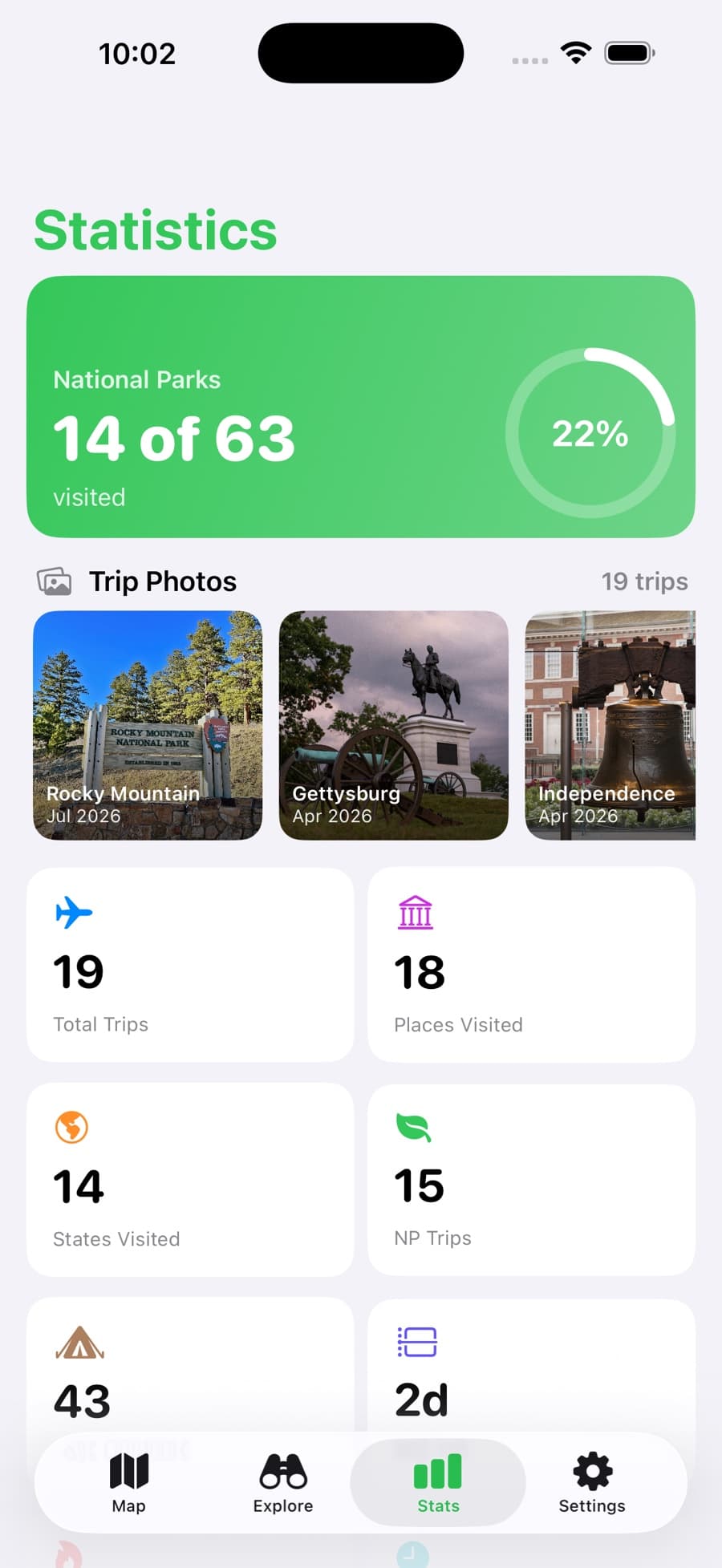
The United States has 63 national parks, in 30 states and 2 territories (American Samoa and US Virgin Islands). That’s the count most people mean, and the one the Park’d checklist uses.
You’ll also see 62. Sequoia and Kings Canyon are two separately established national parks that the National Park Service runs as a single unit, so a count of units comes out one short. Both numbers are right; they’re counting different things.
- National parks
- 63
- 62 NPS units
- States with one
- 30
- + 2 territories
- States with none
- 20
- but NPS sites in all
- Total area
- 52.5M acres
- 62% of it in Alaska
The full list
All 63 national parks
Alphabetical, with the state each park is in, the year it became a national park and its size from the NPS acreage report. Every name links to its park page.
Acres are the national park only; parks that are also a “preserve” have more land beyond it, except where marked * (New River Gorge, whose figure includes its preserve).
By state
Which state has the most national parks?
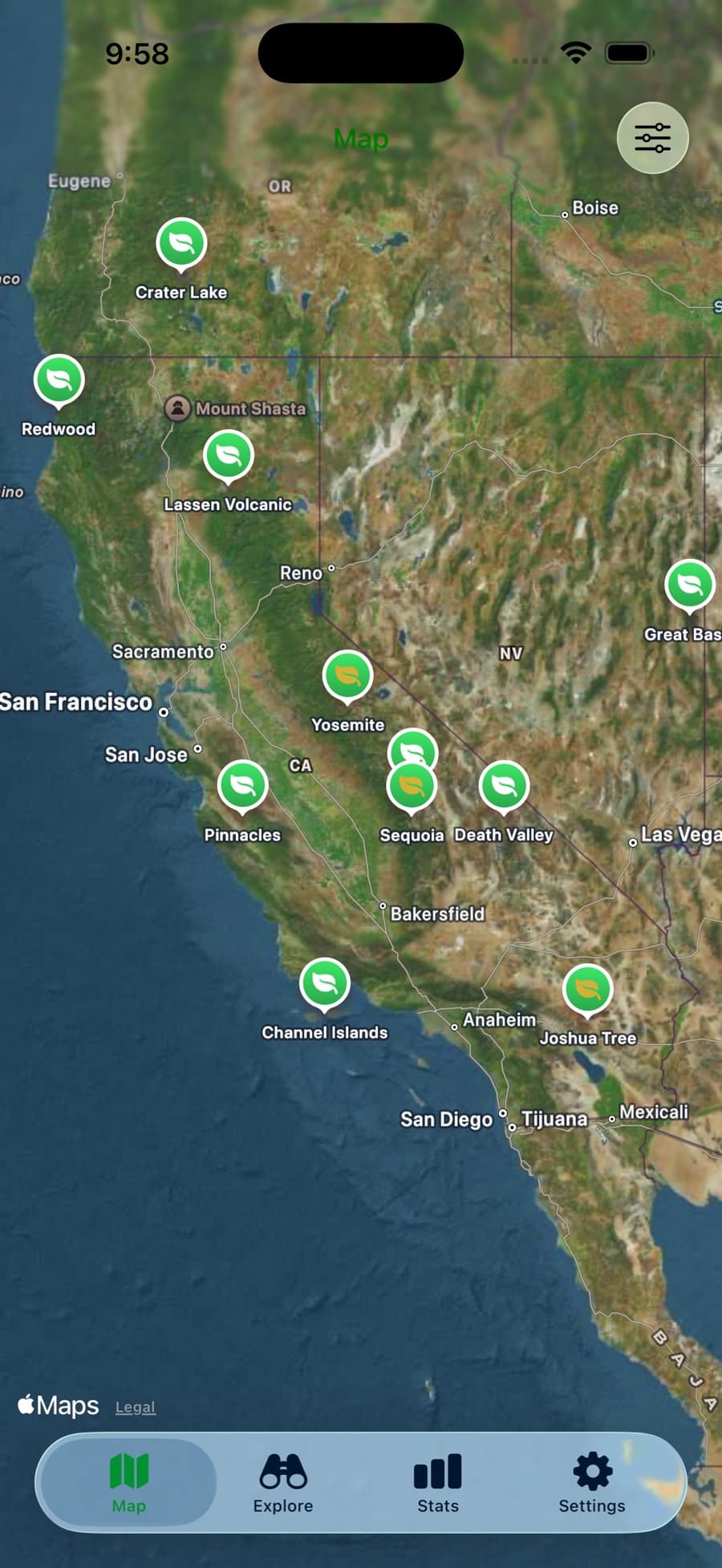
California, with 9, just ahead of Alaska with 8. Then come Utah (5) and Colorado (4). A park that crosses a state line counts for each state it touches, which is how Death Valley (California, Nevada), Great Smoky Mountains (North Carolina, Tennessee) and Yellowstone (Idaho, Montana, Wyoming) add to more than one total.
20 states have no national park at all: Alabama, Connecticut, Delaware, Georgia, Illinois, Iowa, Kansas, Louisiana, Maryland, Massachusetts, Mississippi, Nebraska, New Hampshire, New Jersey, New York, Oklahoma, Pennsylvania, Rhode Island, Vermont and Wisconsin. Every one of them still has National Park Service sites; the national parks by state page lists them all.
The record holders
Oldest, newest, biggest, smallest
| Record | Park | The number |
|---|---|---|
| Oldest | Yellowstone National Park | Established March 1, 1872 |
| Newest | New River Gorge National Park & Preserve | Established December 27, 2020 |
| Largest | Wrangell–St. Elias National Park & Preserve | 8,323,146 acres |
| Smallest | Gateway Arch National Park | 193 acres |
Wrangell–St. Elias is 43,163 times the size of Gateway Arch. Alaska’s 8 parks hold 62% of all national park land.
The busiest year for new parks was 1980, with 9. 7 of them arrived on a single day, December 2, 1980: Gates of the Arctic, Glacier Bay, Katmai, Kenai Fjords, Kobuk Valley, Lake Clark and Wrangell–St. Elias. The five most recent additions are New River Gorge (2020), White Sands (2019), Indiana Dunes (2019), Gateway Arch (2018) and Pinnacles (2013).
Parks vs. units
Why 400+ NPS sites aren't all national parks
The National Park Service manages 433 units in at least 19 designations, by its own count. People call all of them “parks”, but only 63 carry the national park title. The NPS Data API lists 474 places in all, counting affiliated areas and other sites alongside the official units.
The name comes from how a place was created. Per the NPS designations guide, names are set in the act of Congress that authorizes a site, except national monuments, which a president can proclaim under the Antiquities Act of 1906. National parks are described there as generally large natural places where hunting, mining and consumptive activities aren’t allowed; a national preserve is similar, but Congress permits hunting and resource extraction.
| Designation | Sites |
|---|---|
| National Monument | 83 |
| National Historic Site | 78 |
| National Historical Park | 64 |
| Other / unlabelled | 34 |
| National Historic Trail | 18 |
| National Memorial | 17 |
| National Recreation Area | 16 |
| National Battlefield | 11 |
Same standing, different names