Crater Lake National Park
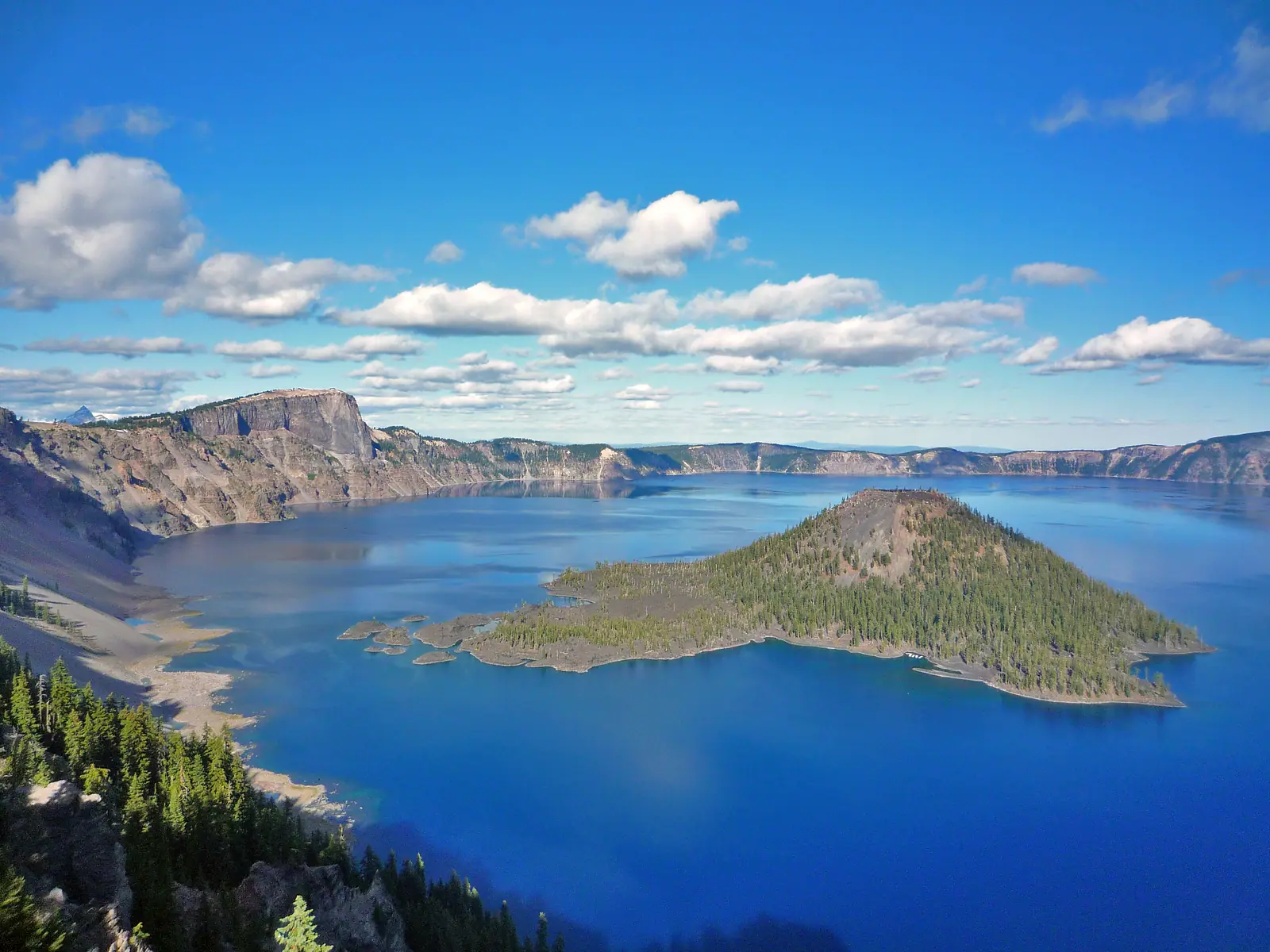
Crater Lake inspires awe. Native Americans witnessed its formation 7,700 years ago, when a violent eruption triggered the collapse of a tall peak. Scientists marvel at its purity—fed by rain and snow, it’s the deepest lake in the USA and one of the most pristine on Earth. Artists, photographers, and sightseers gaze in wonder at its blue water and stunning setting atop the Cascade Mountain Range. — nps.gov
Crater Lake National Park at a glance
- State
- Oregon
- Established
- May 22, 1902
- Size
- 183,224 acres
- 2025 visits
- 632,242
- Busiest-park rank
- #36 of 63
- Entrance
- $30 / vehicle
Best time to visit
When is Crater Lake quiet?
Crater Lake is busiest in July and quietest in January. For a quieter visit outside the dead of the off-season, June is the quietest shoulder-season month, going by National Park Service visitor counts for 2021–2025.
In 2025 the park logged 632,242 recreation visits, the #36 busiest of the 63 national parks. Quiet months can also mean closed roads or facilities, so check current conditions before you go.
Crowd calendar, all 63 parks →Is Crater Lake open right now? →
Average visits by month
2021–2025 · NPS IRMAQuietest: JanuaryBusiest: July
Fees & passes
What it costs to visit Crater Lake
From the NPS fees data, checked October 1, 2026.
Visiting several parks this year? The pass calculator shows whether the America the Beautiful pass pays off.
Reservations · 2026
No park-wide reservation
The National Park Service lists no timed-entry or vehicle reservation for Crater Lake National Park. Campgrounds, tours and backcountry permits may still need booking, so check the park's plan-your-visit page.
Things to do
Things to do in Crater Lake
- Scenic Rim Drive1-3 Hours · Summer, Fall
The historic Rim Drive includes 33-miles (53-km) of lake views, panoramic vistas, forests and meadows. The contours of the road were designed to compliment the natural landscape, and disappear from view as you look…
Pets OK - Biking at Crater LakeSummer, Fall
Each year, increasing numbers of cyclists come to Crater Lake National Park to ride around the lake on the physically demanding, 33 mile (53 km) Rim Drive. Steep hills at high elevation may encourage even the most fit…
Pets OK - Snowshoeing at Crater LakeWinter, Spring
Snowshoeing is a popular activity during the long winter at Crater Lake National Park.
From the National Park Service (checked October 1, 2026). Each title opens its nps.gov page with current conditions.
By activity
- Astronomy44
- Auto and ATV33
- Backcountry Camping51
- Backcountry Hiking43
- Biking44
- Birdwatching48
- Boat Tour16
- Boating27
- Bus/Shuttle Guided Tour8
- Camping60
- Car or Front Country Camping41
- Citizen Science17
- Compass and GPS10
- Cross-Country Skiing20
- Dining20
- Fishing41
- Food46
- Front-Country Hiking42
- Gift Shop and Souvenirs25
- Guided Tours54
- Hiking60
- Museum Exhibits36
- Off-Trail Permitted Hiking13
- Orienteering5
- Picnicking34
- Road Biking25
- RV Camping28
- Scenic Driving30
- Self-Guided Tours - Auto19
- Self-Guided Tours - Walking22
- Skiing23
- Snow Play17
- Snowmobiling9
- Snowshoeing24
- Stargazing39
- Swimming17
- Wildlife Watching53
The number shows how many of the 63 national parks offer each activity.
Weather
Weather at Crater Lake
July, August, and September are your best bets for warm, dry weather. In May, June, and October, sunny days alternate with periods of rain and snow. Winters at Crater Lake are long and snowy. Storms from the Pacific Ocean dump an annual average of 41 feet (13.5 meters) of snow at park headquarters.
When it's raining or snowing, the lake is usually hidden by clouds. Crater Lake is completely invisible about 50% of the time in the winter!
From the National Park Service.
Getting there
Getting to Crater Lake
From the west (Medford) - Take Hwy 62 to the West Entrance. Open year-round. From the south (Klamath Falls) - Take Hwy 97 north to Hwy 62 to the South Entrance. Open year-round. The North Entrance is on Hwy 138 and is accessed from Interstate 5 east at Roseburg or Hwy 97 south from Bend and Chemult.
Winter travelers from Roseburg take Route 138 east to Route 230 south to Route 62 east to the park's west entrance. Travelers from Bend take Route 97 south to Route 62 to the park's south entrance.
Crater Lake National Park, Crater Lake, OR, 97604 · Directions on nps.gov
Nearby
National parks near Crater Lake
- Redwood National and State Parks146 mi~3 h drive (est.)
- Lassen Volcanic National Park173 mi~4 h drive (est.)
- Mount Rainier National Park272 mi~6 h drive (est.)
- Olympic National Park344 mi~8 h drive (est.)
- Yosemite National Park377 mi~9 h drive (est.)
- North Cascades National Park401 mi~10 h drive (est.)
Straight-line distance between park centers; drive times are rough estimates.
Closest big cities: Portland, Oregon (181 mi) · Seattle (323 mi)
Road trip
Crater Lake, Redwood & Lassen Volcanic
3 parks, about 295 miles between them (~7 h of driving, estimated).
Crater Lake is the orange dot. Tap any park to tick it off your checklist.
Photos of Crater Lake National Park
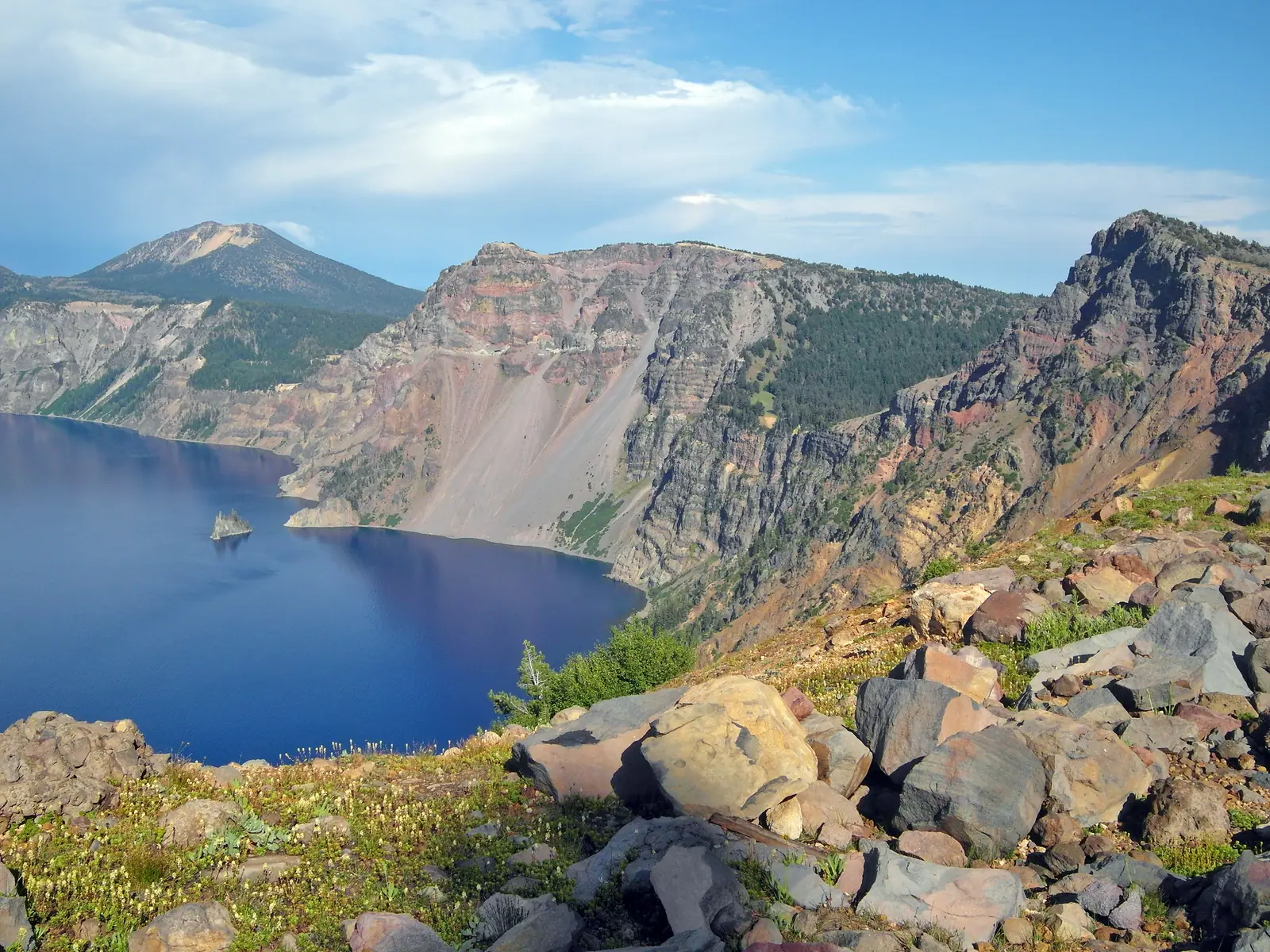
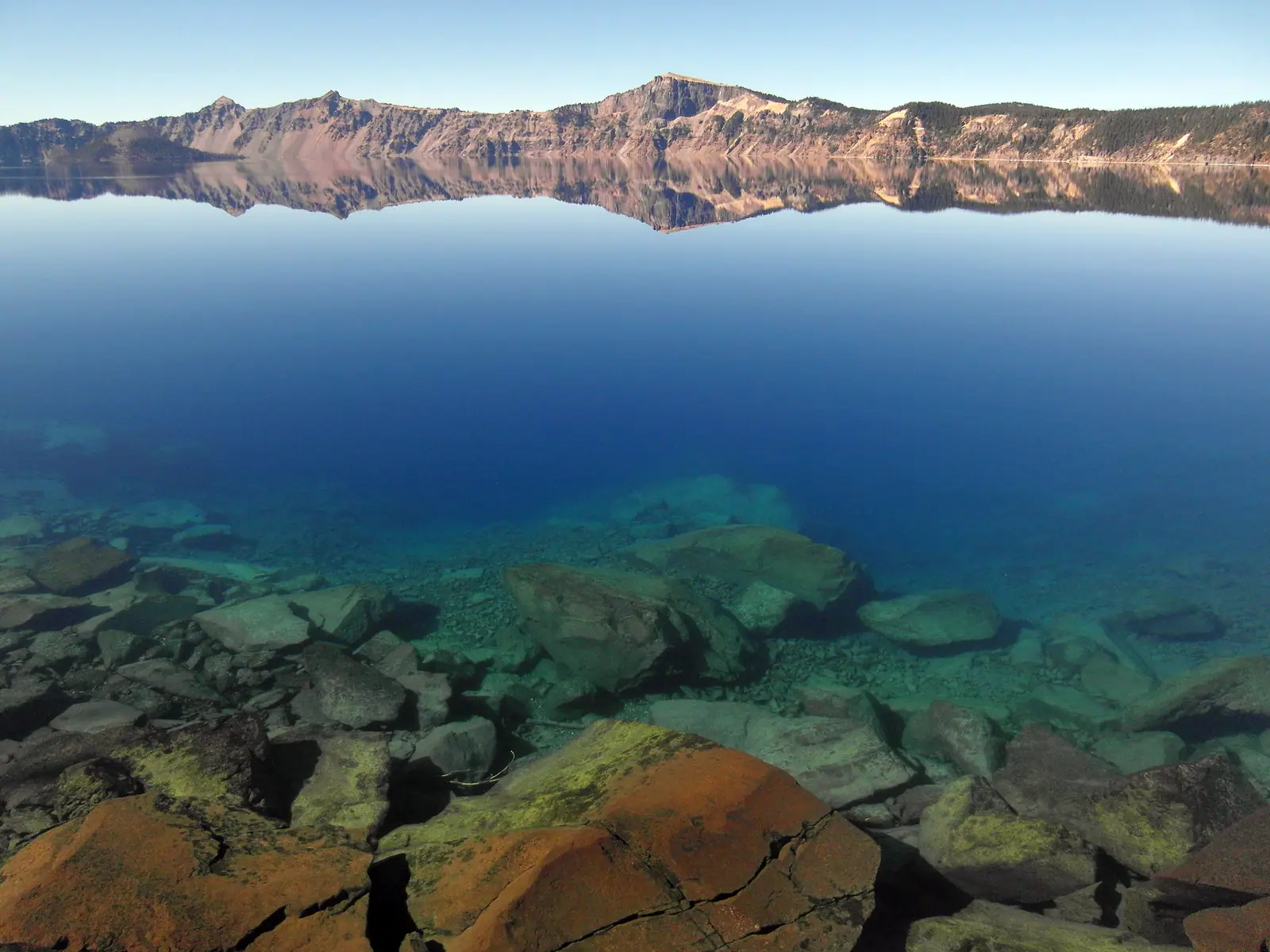
FAQ
Crater Lake, quickly
- When is the best time to visit Crater Lake National Park?
- If you want fewer people, go in June, the quietest shoulder-season month. July is the busiest month on average, and January the quietest, based on NPS recreation visits for 2021–2025. Check nps.gov for seasonal road and facility closures before you go.
- How much does it cost to visit Crater Lake National Park?
- $30 / vehicle. An America the Beautiful annual pass covers entrance fees at every national park.
- Do you need a reservation for Crater Lake National Park in 2026?
- The National Park Service lists no park-wide timed-entry or vehicle reservation for Crater Lake National Park. Campgrounds, tours and some popular hikes may still need bookings, so check the park's plan-your-visit page.
- What are some things to do in Crater Lake National Park?
- The National Park Service lists 3 things to do in Crater Lake National Park, including Scenic Rim Drive, Biking at Crater Lake, Snowshoeing at Crater Lake. Each has its own page on nps.gov with current conditions.
- When did Crater Lake National Park become a national park?
- Crater Lake National Park was established as a national park on May 22, 1902.
- What is the closest national park to Crater Lake?
- Redwood National and State Parks, about 146 miles away in a straight line (roughly 3 hours' drive, estimated).
Sources · 3
- 1.Crater Lake National Park — official site · National Park Service
- 2.NPS Data API — /parks (all park units) · National Park Service (U.S. Department of the Interior)
- 3.Crater Lake National Park — Visitor Use Statistics · National Park Service (IRMA)
About this page
Park facts, photos, fees and visitor counts come from the National Park Service (NPS Data API and Visitor Use Statistics), last checked October 1, 2026. Park'd is an independent app and is not affiliated with the National Park Service. For official, current information, visit nps.gov/crla.

Park'd · free on iPhone & Android
Been to Crater Lake? Log it.
Park'd keeps your national parks map, trips, photos and stats in one place on iPhone and Android. Check off Crater Lake, add the trip, and see how many of the 63 you've got left.